
Hurricane Isaias Hit Georgia: Is Your Home Hiding Storm Damage?


Hurricane season may be winding down, but the damage left behind by strong winds, heavy rain, and falling trees can continue affecting North Georgia homes long after a storm passes.
And here's what homeowners need to understand: not all storm damage is immediately visible.
A few missing shingles, a damp attic, or a small ceiling stain could be the first warning sign of a much bigger problem.
At Clean Way Restoration, we've been helping North Georgia homeowners recover from property damage since 1987.
Here's what you should know about spotting hidden damage after severe weather.
1. Hurricane Isaias Damage in Georgia: More Than Fallen Trees
Hurricane Isaias damage can include roof leaks, water intrusion, fallen trees, and hidden moisture that homeowners may not discover until days after a storm.
But the problems that develop after a storm can be just as serious.
Heavy rain and wind can create several types of property damage:
Missing, lifted, or damaged roof shingles
Water entering attics and wall cavities
Broken gutters and damaged flashing
Fallen trees damaging roofs, decks, and siding
Moisture trapped beneath flooring
Wet insulation and potential mold growth
Even homes that escaped major damage should receive a careful visual inspection.

2. Hidden Storm Damage Can Start With One Small Roof Leak
A roof doesn't have to collapse to create an expensive problem.
Strong winds can loosen shingles or damage flashing around chimneys, vents, and skylights.
When rain finds its way through those openings, moisture can travel into areas homeowners rarely inspect.
Watch for:
New brown or yellow ceiling stains
Peeling paint or bubbling drywall
Damp insulation in the attic
Musty odors in upstairs rooms
Water appearing around windows or light fixtures
Important: Don't climb onto a damaged or wet roof. Have a qualified professional inspect it safely.

3. Water Damage Can Continue Long After the Rain Stops
One of the biggest misconceptions about storm damage is that everything is fine once the water dries.
Unfortunately, moisture can remain trapped inside building materials.
Drywall, subflooring, insulation, and wood framing can retain moisture even when surfaces appear dry.
Over time, that can lead to deterioration and mold growth.
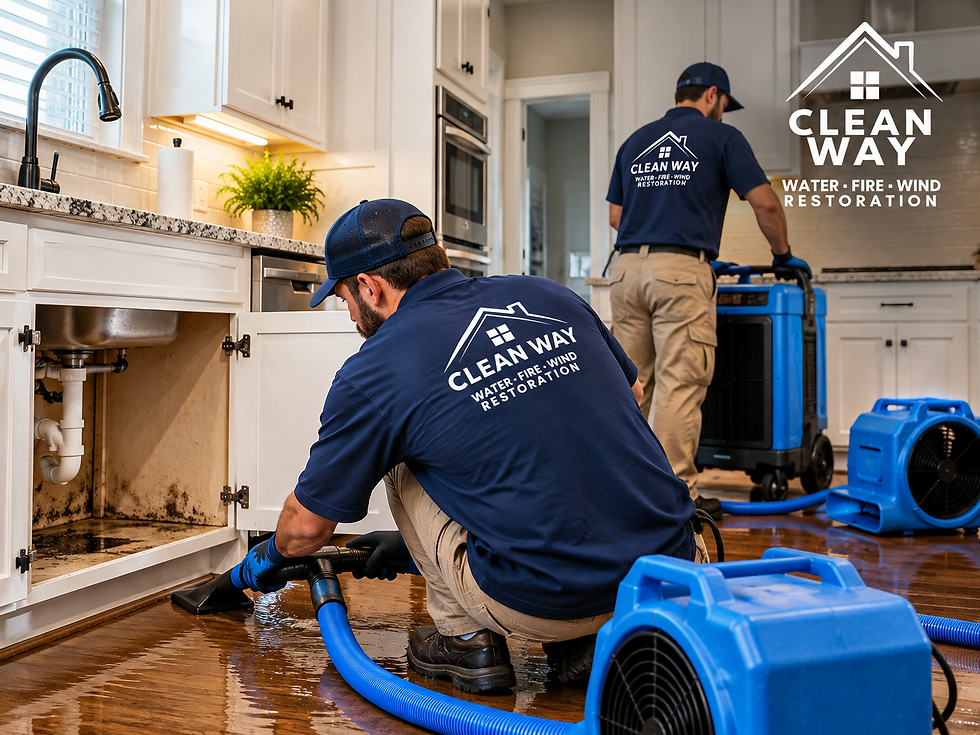
Professional water mitigation may involve moisture detection, controlled drying, removal of materials that cannot be salvaged, and monitoring until affected areas are properly dried.

4. Fallen Trees Can Cause More Damage Than You Think
A fallen tree can damage far more than a roof.
Depending on where it lands, it may affect structural framing, gutters, siding, windows, decks, or interior ceilings.
Even a large branch striking the roof can create an opening for rainwater.
If a tree has damaged your home:
Stay clear of unstable trees, branches, and downed electrical lines.
Photograph visible damage from a safe location.
Avoid entering areas with suspected structural damage.
Arrange emergency tree removal and temporary protection where appropriate.
Have water intrusion and necessary repairs assessed.
Clean Way Restoration provides emergency tree removal, roof tarping, storm damage restoration, and reconstruction services.

5. Could Storm Damage Lead to Mold?
Yes. When stormwater enters a home and affected materials remain wet, mold can develop.
The EPA recommends drying water-damaged areas and belongings within 24–48 hours when possible to help prevent mold growth.
Common warning signs include musty odors, persistent dampness, discoloration, and visible growth.
Mold can also develop in areas homeowners cannot easily see, including behind baseboards, inside walls, and beneath flooring.
If you suspect hidden moisture, a professional assessment can help identify the source and extent of the problem.
6. What Should North Georgia Homeowners Check First?
Area | Warning Signs | Recommended Action |
Roof | Missing shingles, damaged flashing | Arrange a professional inspection |
Attic | Damp insulation, water stains | Check for moisture intrusion |
Ceilings | Stains, bubbling paint | Investigate possible leaks |
Flooring | Warping, soft spots, odors | Assess hidden moisture |
Exterior | Fallen limbs, damaged siding | Document damage safely |
Crawl Space | Standing water, damp wood | Address water and drying needs |
Don't assume your home escaped damage simply because you didn't lose power or see a tree fall.

7. Should You File an Insurance Claim for Storm Damage?
That depends on the damage, your deductible, and the terms of your policy.
Not every small repair necessarily warrants an insurance claim.
Before making a decision, homeowners should understand the damage, document what happened, and review their coverage.
The Georgia Office of Insurance and Safety Fire provides resources for homeowners dealing with storm-related property damage.
A Free Assessment from Clean Way Restoration can help you better understand the visible damage and whether further investigation or repairs may be necessary.
Why Homeowners Trust Clean Way Restoration
Clean Way Restoration has served North Georgia since 1987.
We're a locally owned, family-run company that handles emergency mitigation and full reconstruction, helping homeowners avoid coordinating multiple contractors for different stages of a restoration project.
Our leadership also brings valuable experience: one owner is a former insurance claims adjuster, and another is a civil engineer.
Our services include:
Water damage restoration
Storm damage repairs
Emergency tree removal and roof tarping
Fire and smoke restoration
Mold remediation
Complete reconstruction
We're proud to have earned Best of Georgia recognition in 2023, 2024, and 2025.
Frequently Asked Questions
Can storm damage show up days after the storm?
Yes. Water stains, damp insulation, and moisture-related odors may become noticeable after the initial storm has passed.
How quickly should storm-related water damage be addressed?
As soon as possible. The EPA recommends drying wet materials within 24–48 hours when possible to reduce mold risk.
Can Clean Way Restoration repair my home after storm damage?
Yes. We provide water mitigation, storm damage restoration, emergency roof tarping, and full reconstruction.
Do you offer emergency services?
Yes. Clean Way Restoration provides 24/7 emergency response.

Don't Let Hidden Storm Damage Become Your Next Nightmare
The storm may have passed, but that doesn't mean your home is completely in the clear.
A small roof leak today could become damaged drywall, ruined flooring, or a much larger repair tomorrow.
If you've noticed water stains, roof damage, fallen trees, or unusual moisture after severe weather, contact Clean Way Restoration.
Call (770) 536-9258 for a Free Assessment.
We're available 24/7 and serve homeowners throughout Hall, Gwinnett, Forsyth, Dawson, Cherokee, North Fulton, Cobb, Lumpkin, White, Banks, Habersham, Clarke, and Jackson counties.
Visit Clean Way Restoration to learn more.


Comments